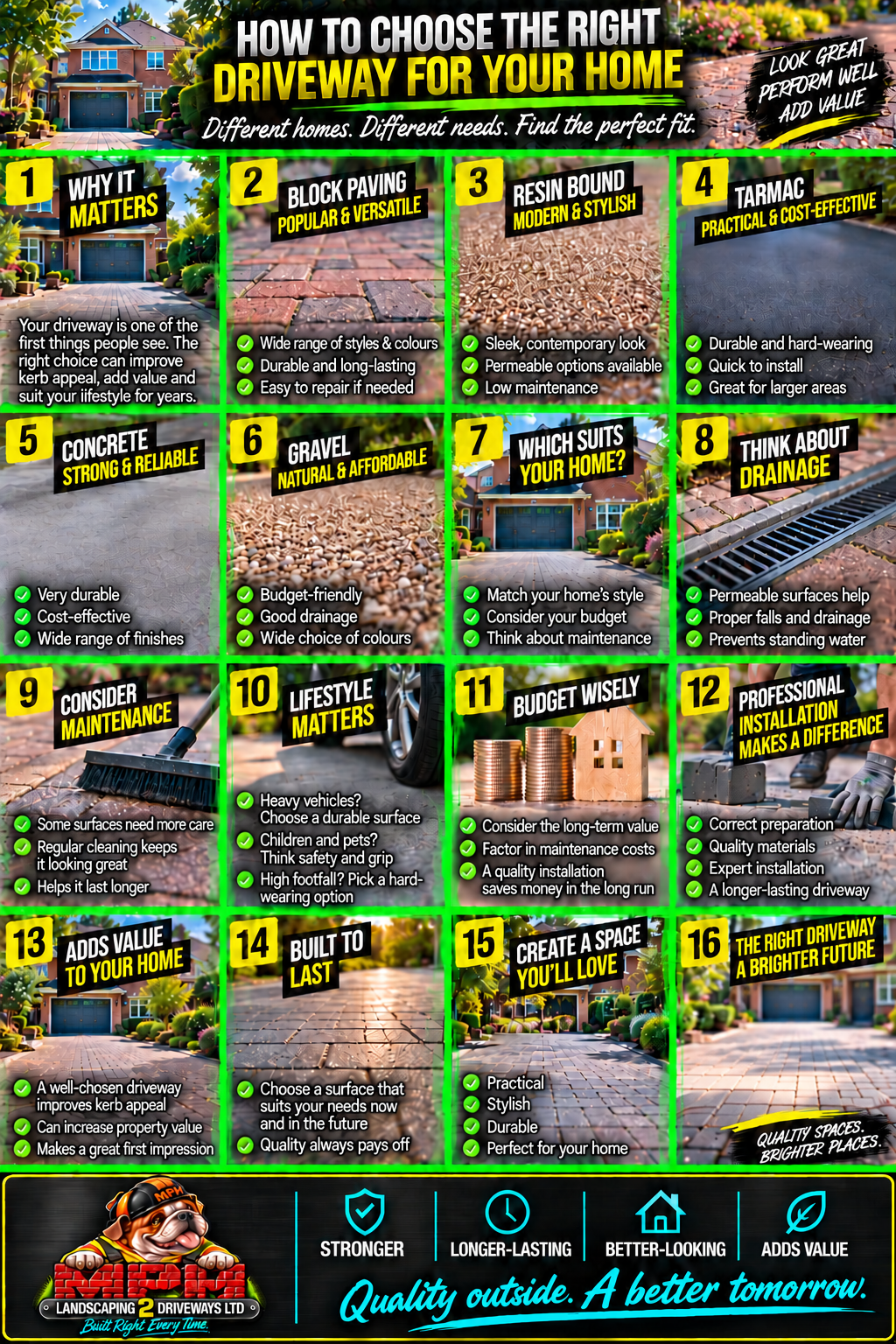
Choosing a driveway for your home
Compare block paving, resin bound, tarmac, concrete and gravel with your home, budget and daily use in mind. Think about drainage and ongoing care as well as appearance.
Key points: Choosing a driveway for your home
- Consider the vehicles, foot traffic and available space the driveway needs to accommodate.
- Compare installation choices with future maintenance requirements.
- Match the finished surface to the property and a suitable drainage design.
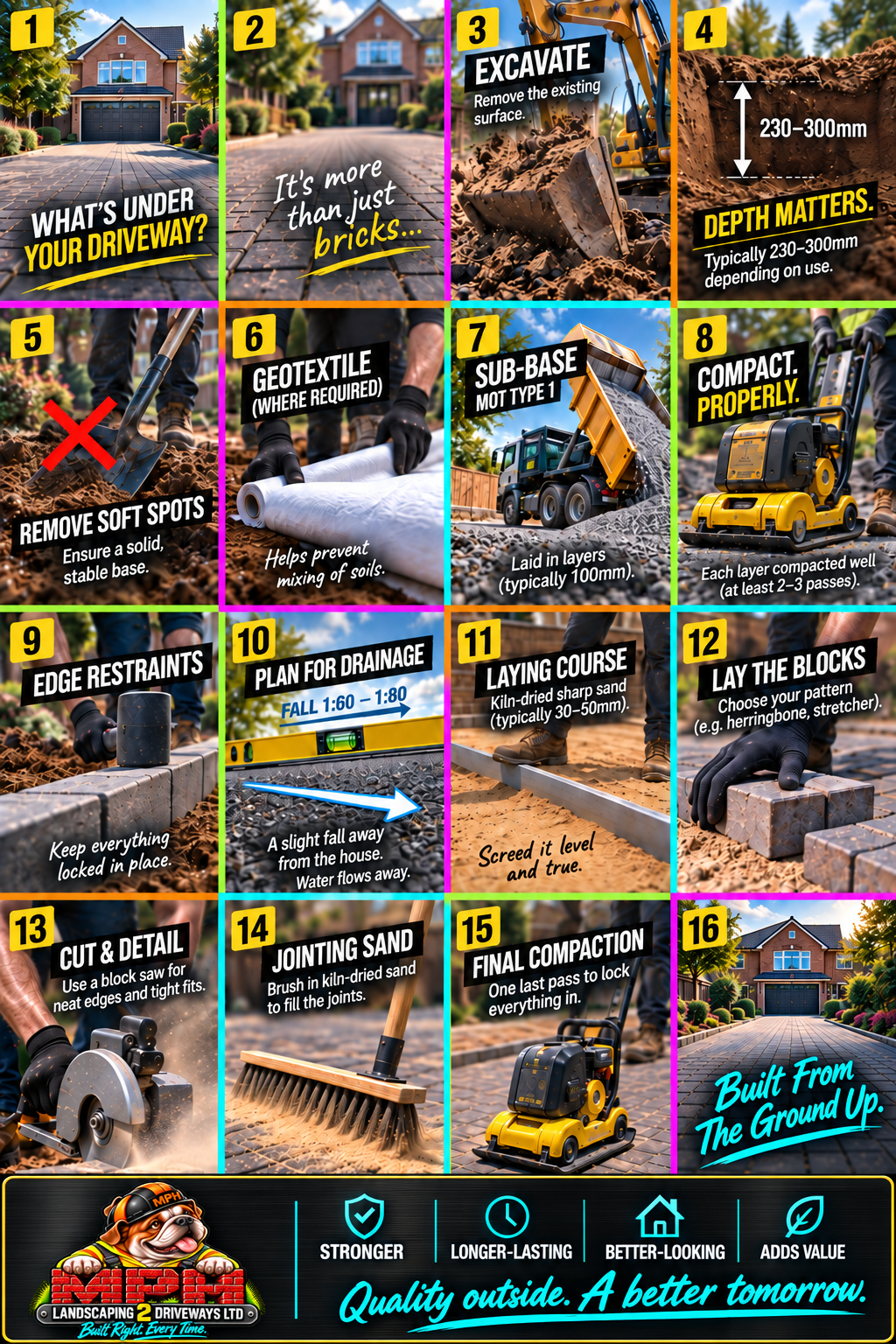
Driveway construction process
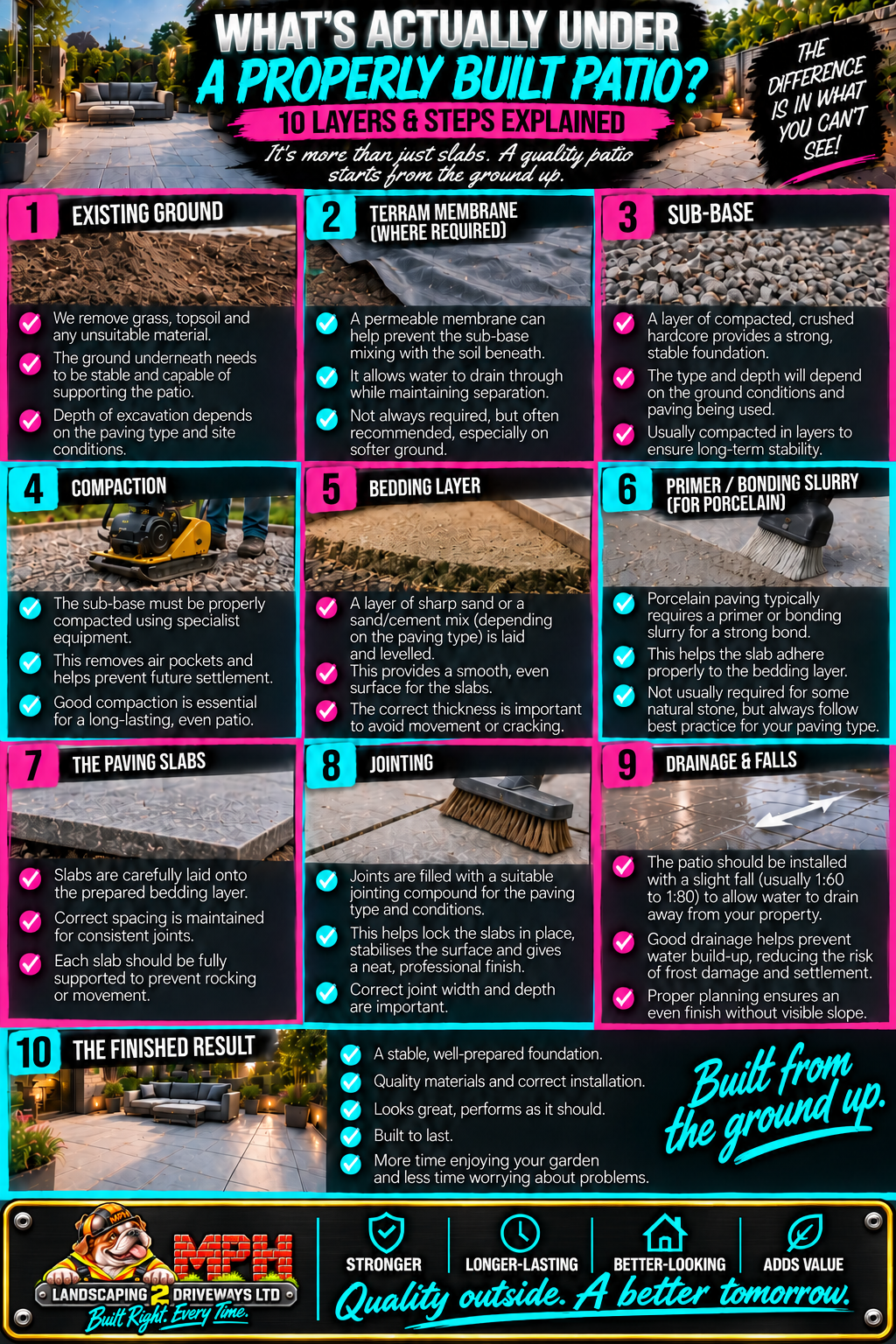
See what goes beneath a block-paved driveway, from excavation and a stable sub-base to edge restraints, drainage, laying the blocks and finishing the joints.
Key points: Driveway construction process
- Preparation starts with assessing the ground and removing unsuitable material.
- The sub-base, bedding and drainage need to suit the site and intended use.
- Careful laying, cutting, jointing and compaction complete the surface.
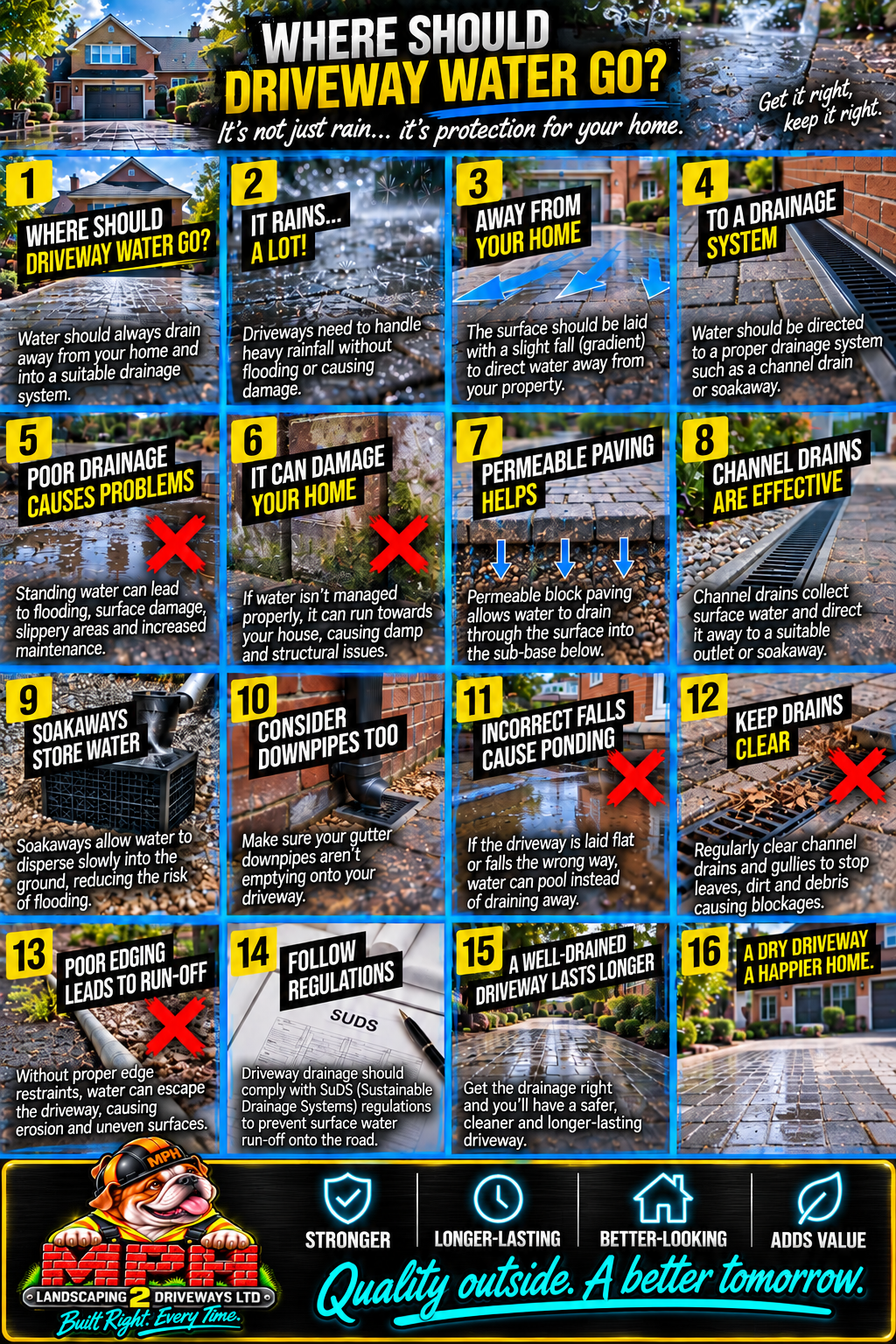
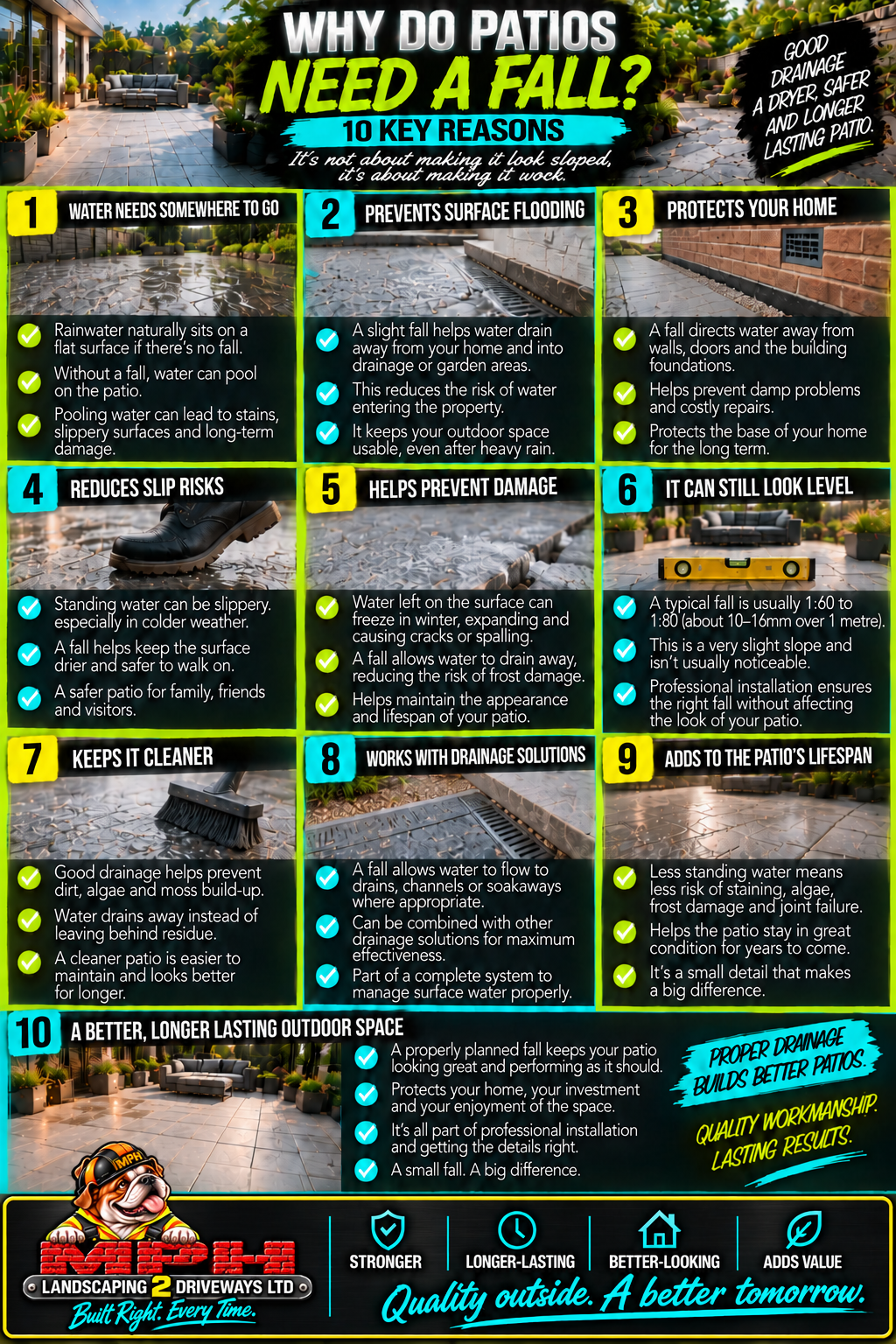
Where should driveway water go?
Good driveway drainage starts with deciding where rainfall will go. Explore how levels, falls, channels and permeable surfaces work together to manage water.
Key points: Where should driveway water go?
- Plan drainage alongside the driveway layout and construction.
- Choose a drainage approach suited to the surface and ground conditions.
- Keep channels and outlets clear so the system can continue working.
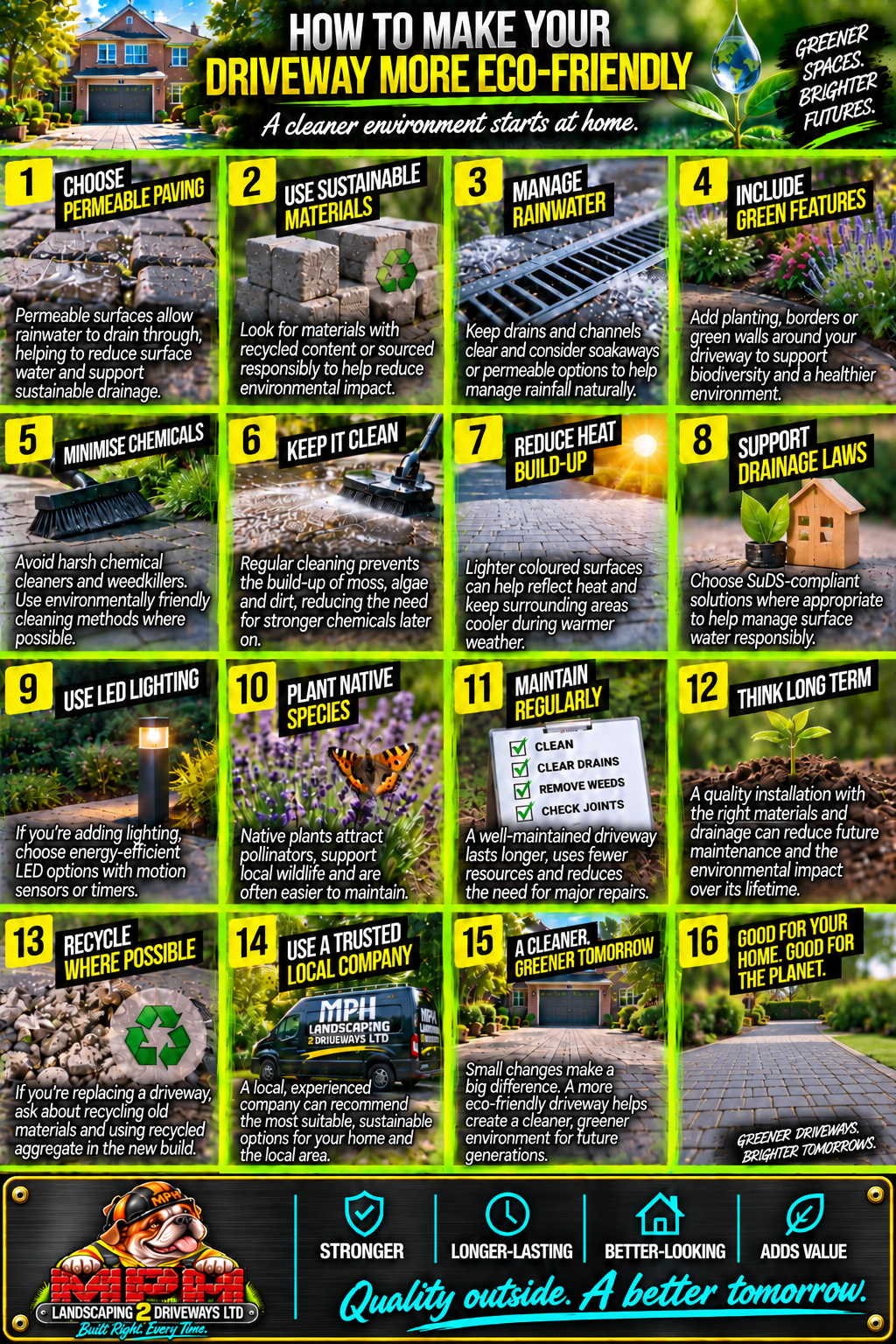
Making your driveway more eco-friendly
Explore ways to make a driveway project more environmentally considerate, including permeable options, responsible material choices, planting, rainwater management and long-term maintenance.
Key points: Making your driveway more eco-friendly
- Consider a suitable permeable construction and how rainfall will be managed.
- Discuss recycled materials and retaining or adding planting where practical.
- Look after the finished driveway to reduce avoidable repairs and replacement.
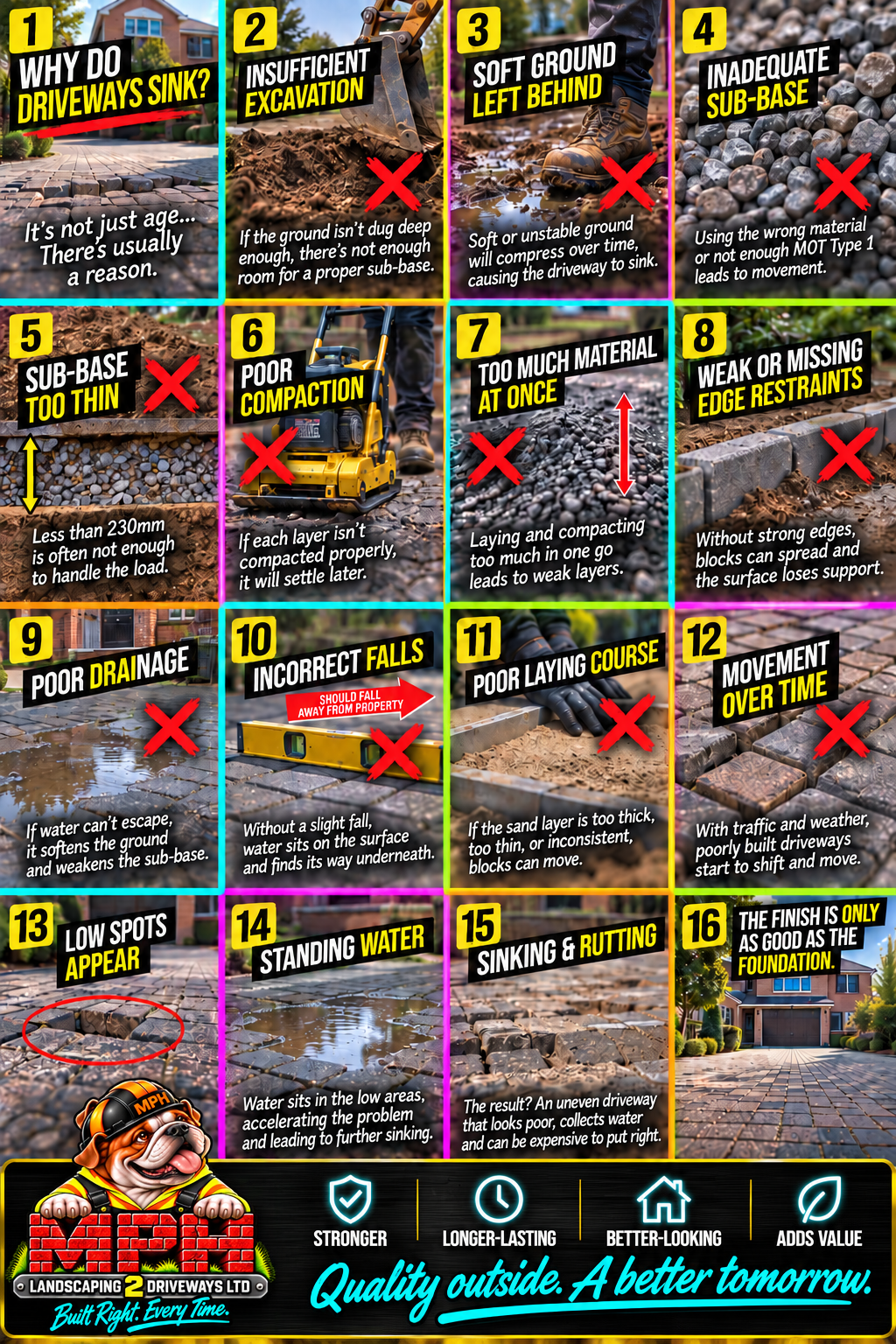
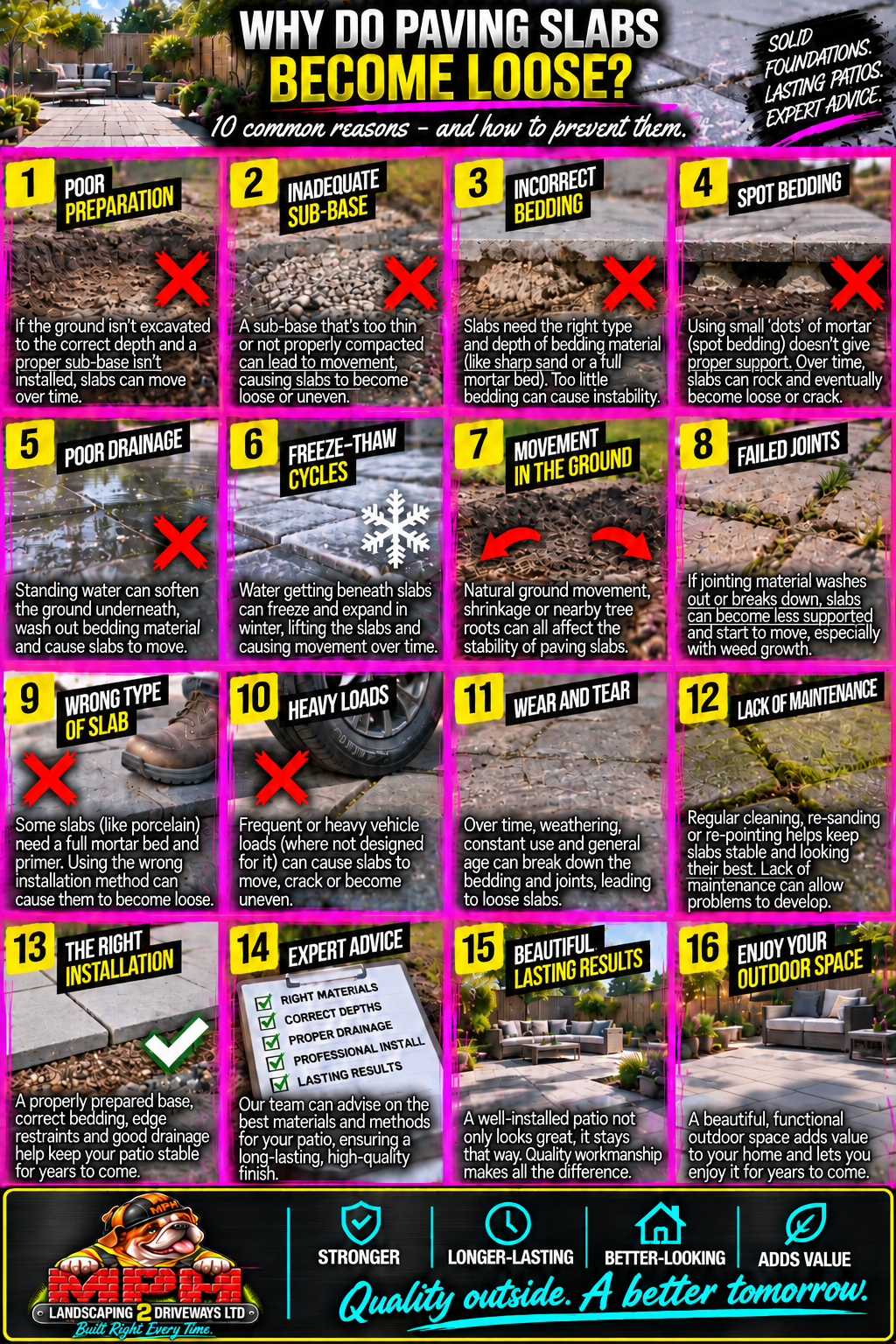
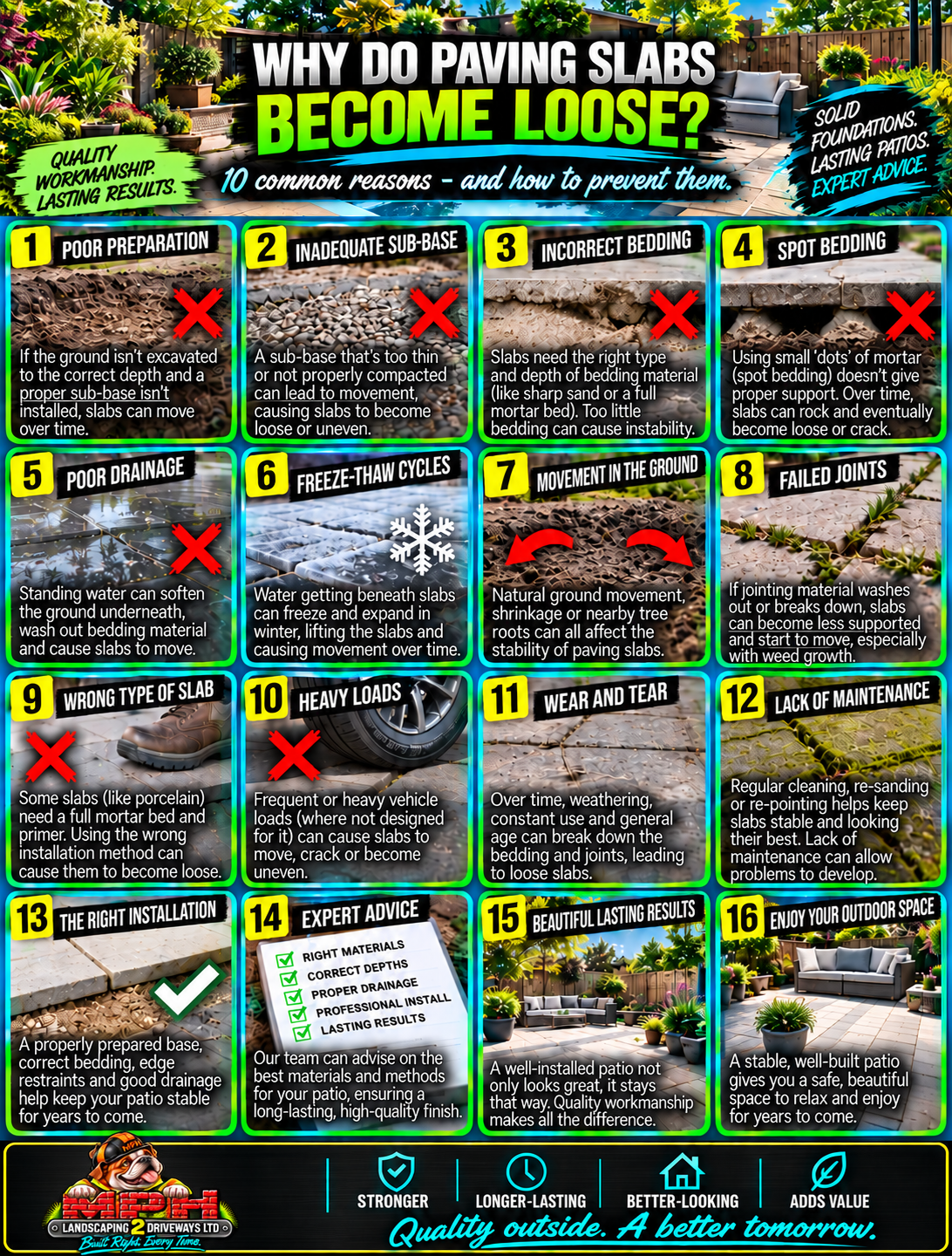
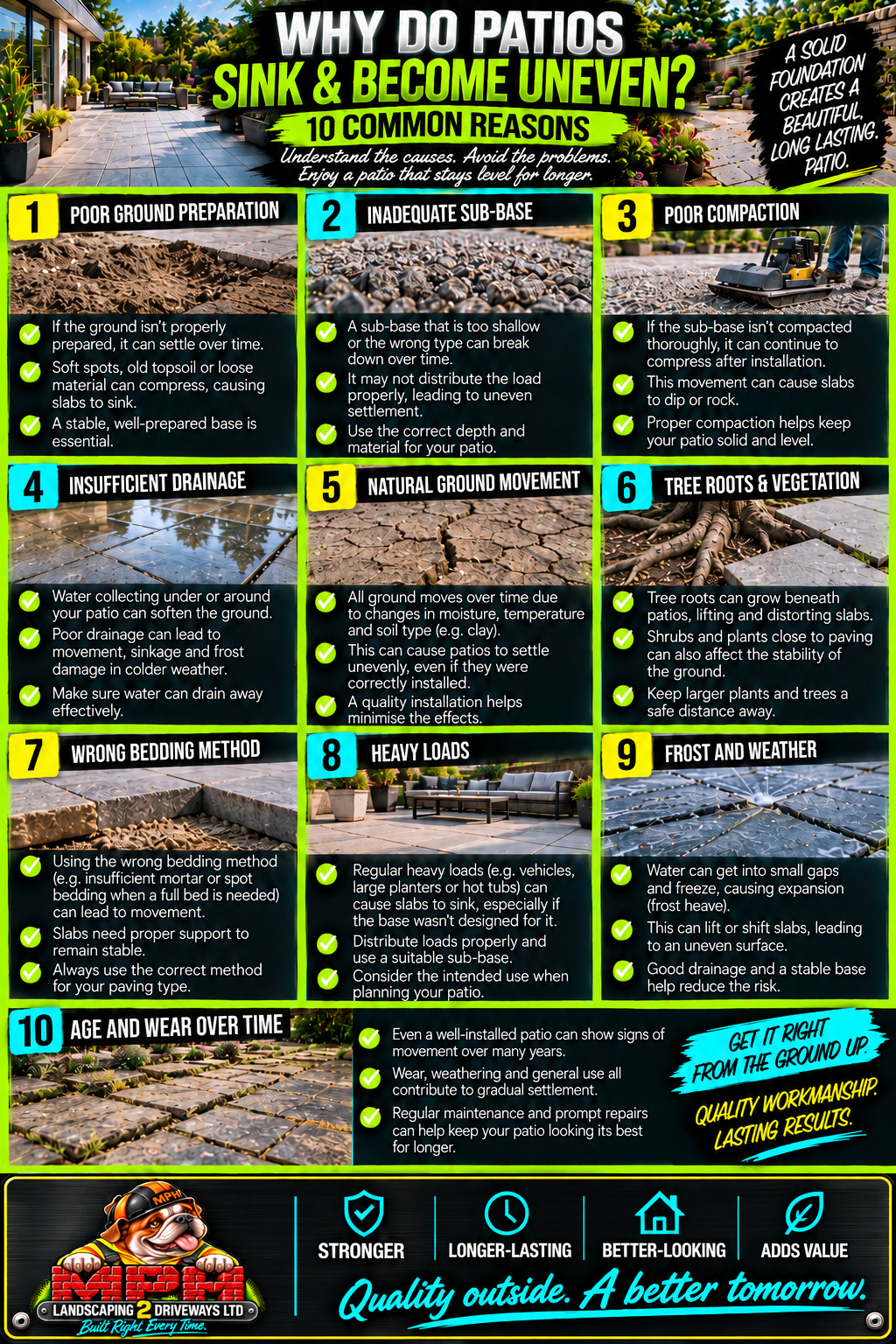
Why do driveways sink?
Understand why a driveway can settle or develop dips. This guide looks beneath the surface at preparation, compaction, drainage and the loads a driveway carries.
Key points: Why do driveways sink?
- Soft ground and an inadequately prepared sub-base can allow movement.
- Water and vehicle loading can expose weaknesses in the construction.
- Investigate the underlying cause before repairing or relaying the affected area.
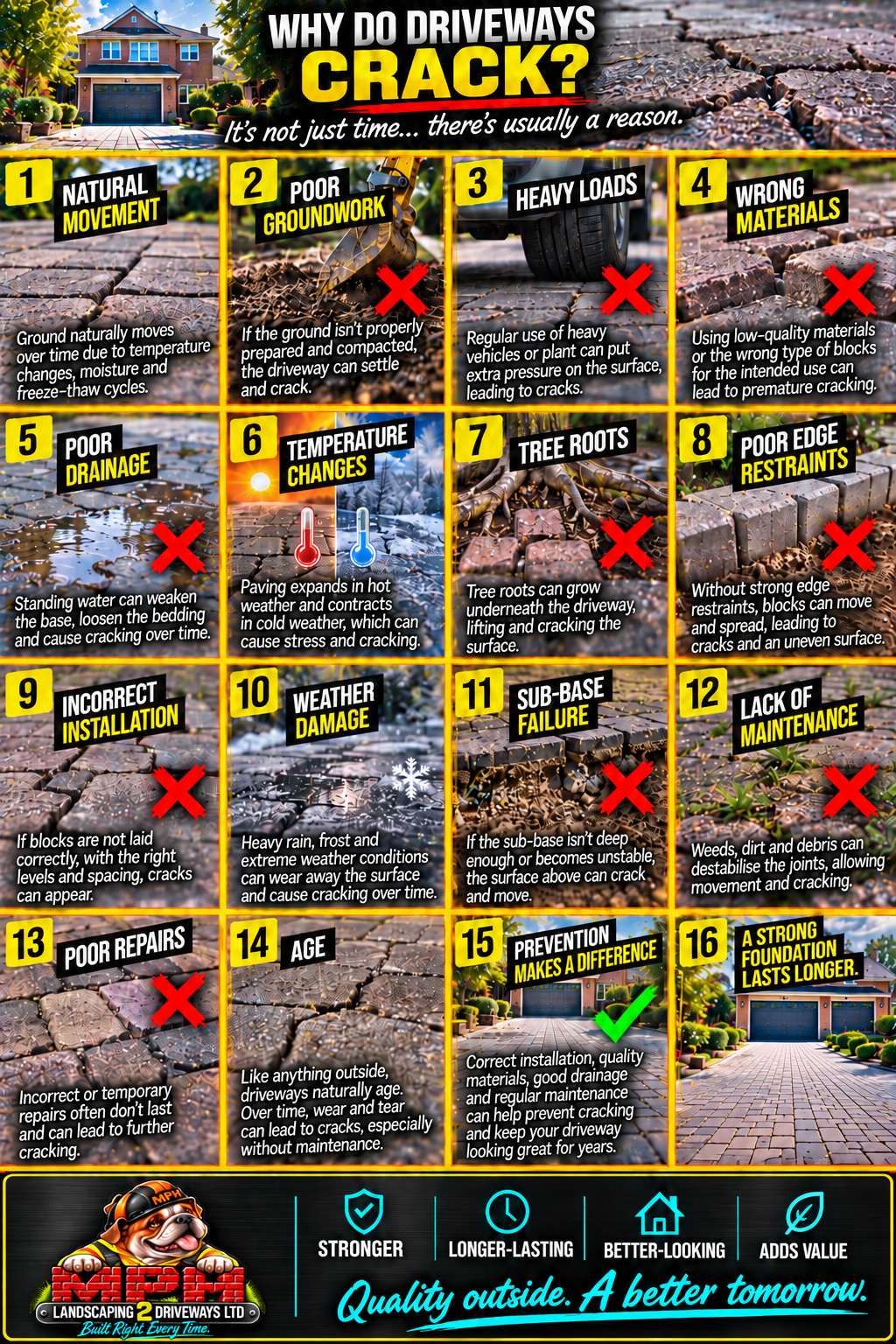
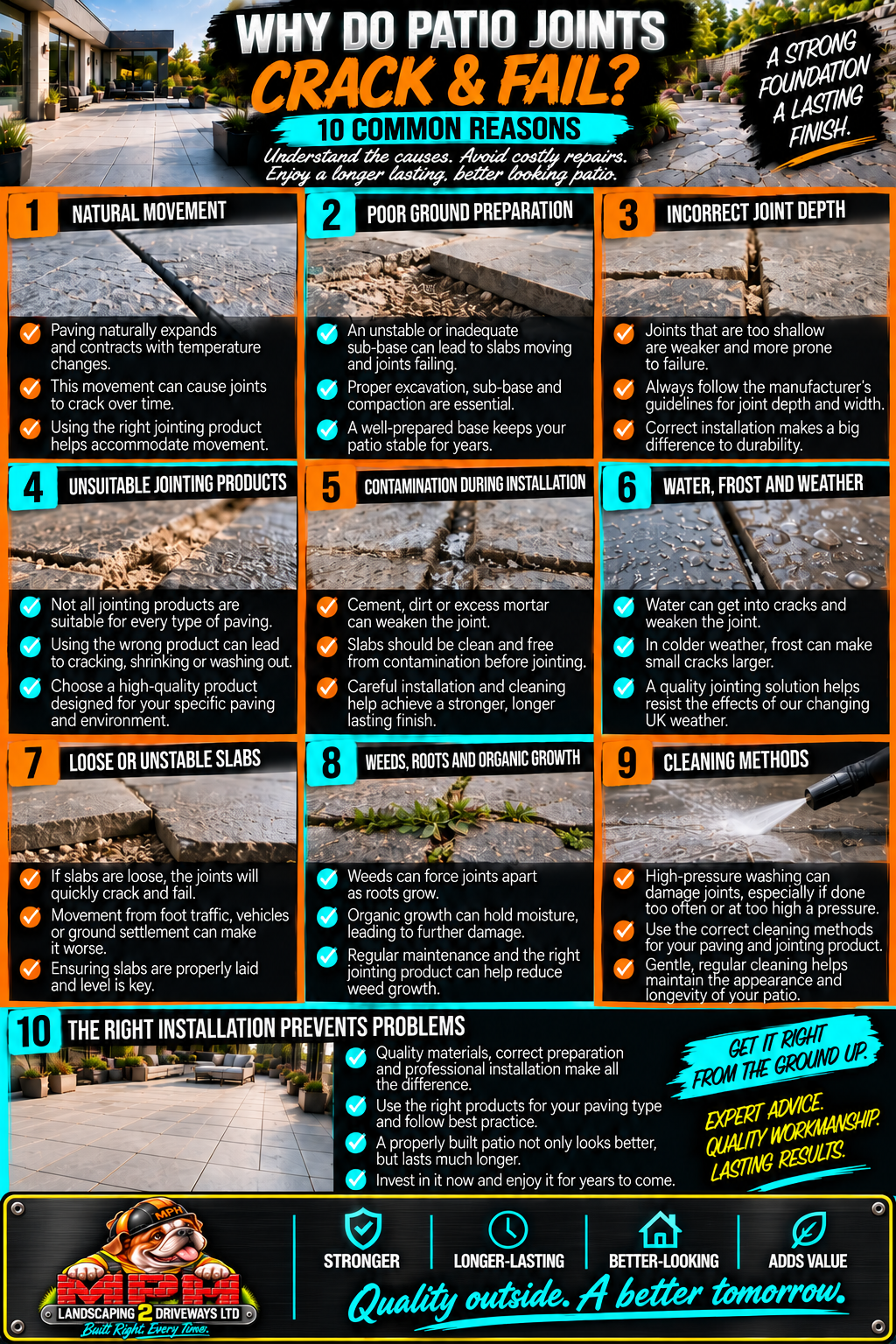
Why do driveways crack?
Explore common reasons for driveway cracking, including movement beneath the surface, water, weather and loading, and why identifying the cause helps guide repairs.
Key points: Why do driveways crack?
- The visible crack may reflect a problem in the supporting layers.
- Different driveway materials respond differently to weather and movement.
- Assess the condition of the surrounding surface before choosing a repair.
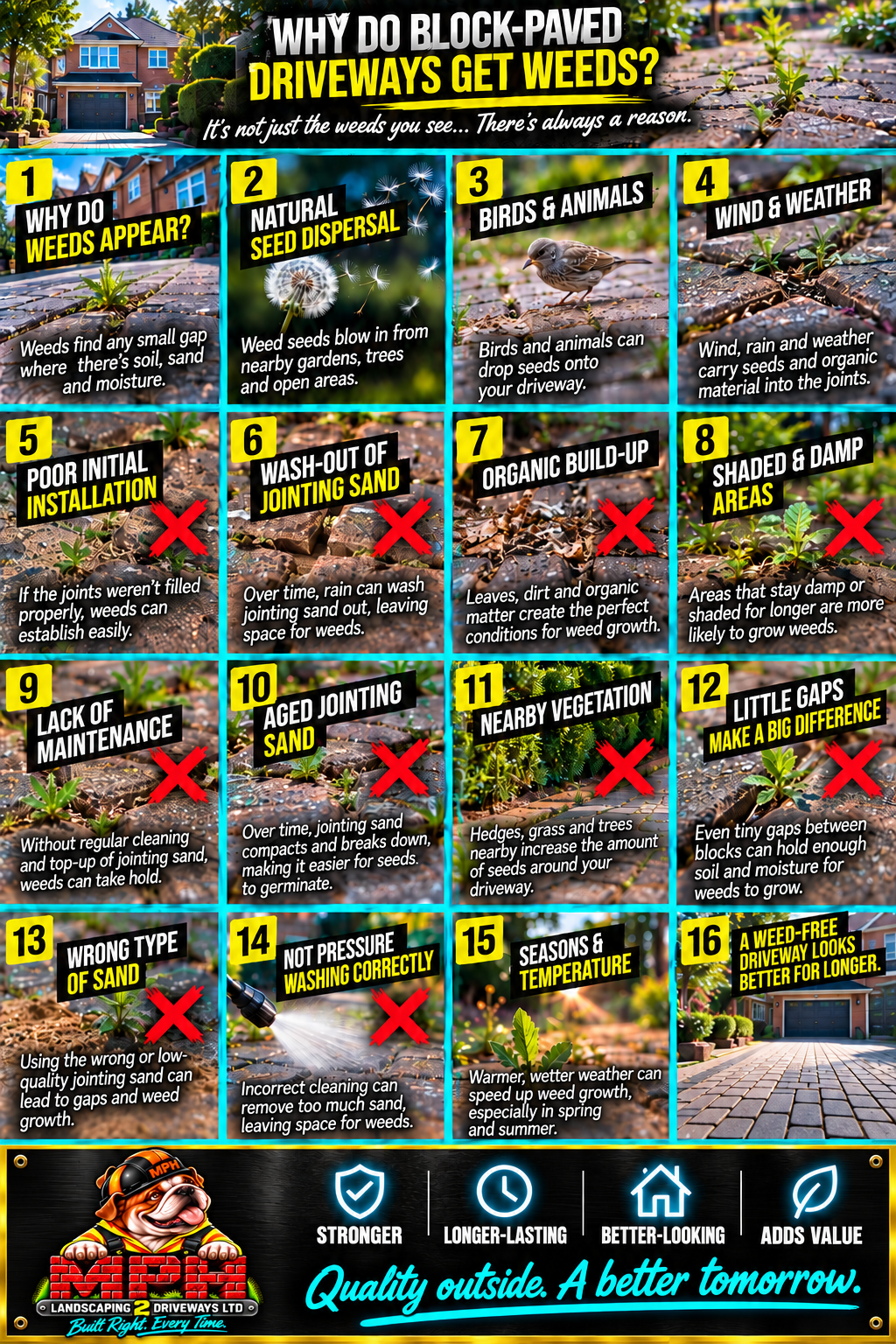
Why do block-paved driveways get weeds?
Learn how weeds establish themselves in block-paving joints and why regular cleaning and joint maintenance matter for keeping a driveway looking tidy.
Key points: Why do block-paved driveways get weeds?
- Dirt and organic material can collect between paving blocks.
- Remove weeds and keep the surface clear of leaves and debris.
- Check the condition of the joints and use maintenance methods suited to the paving.
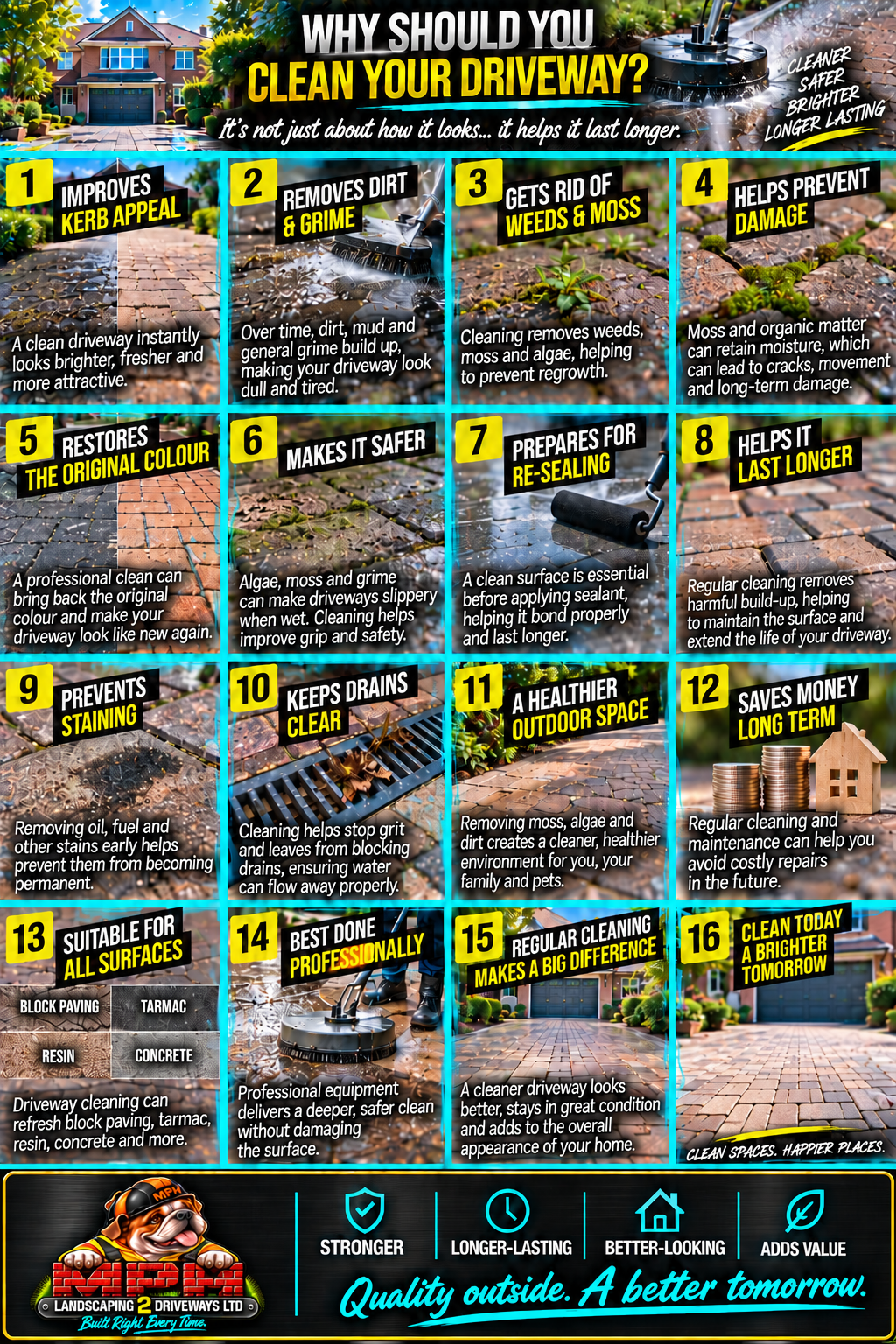
Why should you clean your driveway?
Regular cleaning helps remove dirt, moss, algae and stains from a driveway. This guide explains how suitable care can improve its appearance and condition.
Key points: Why should you clean your driveway?
- Clear debris before it builds up across the surface and in drainage channels.
- Choose cleaning products and equipment appropriate for the driveway material.
- Check joints and edges after cleaning and address maintenance needs early.
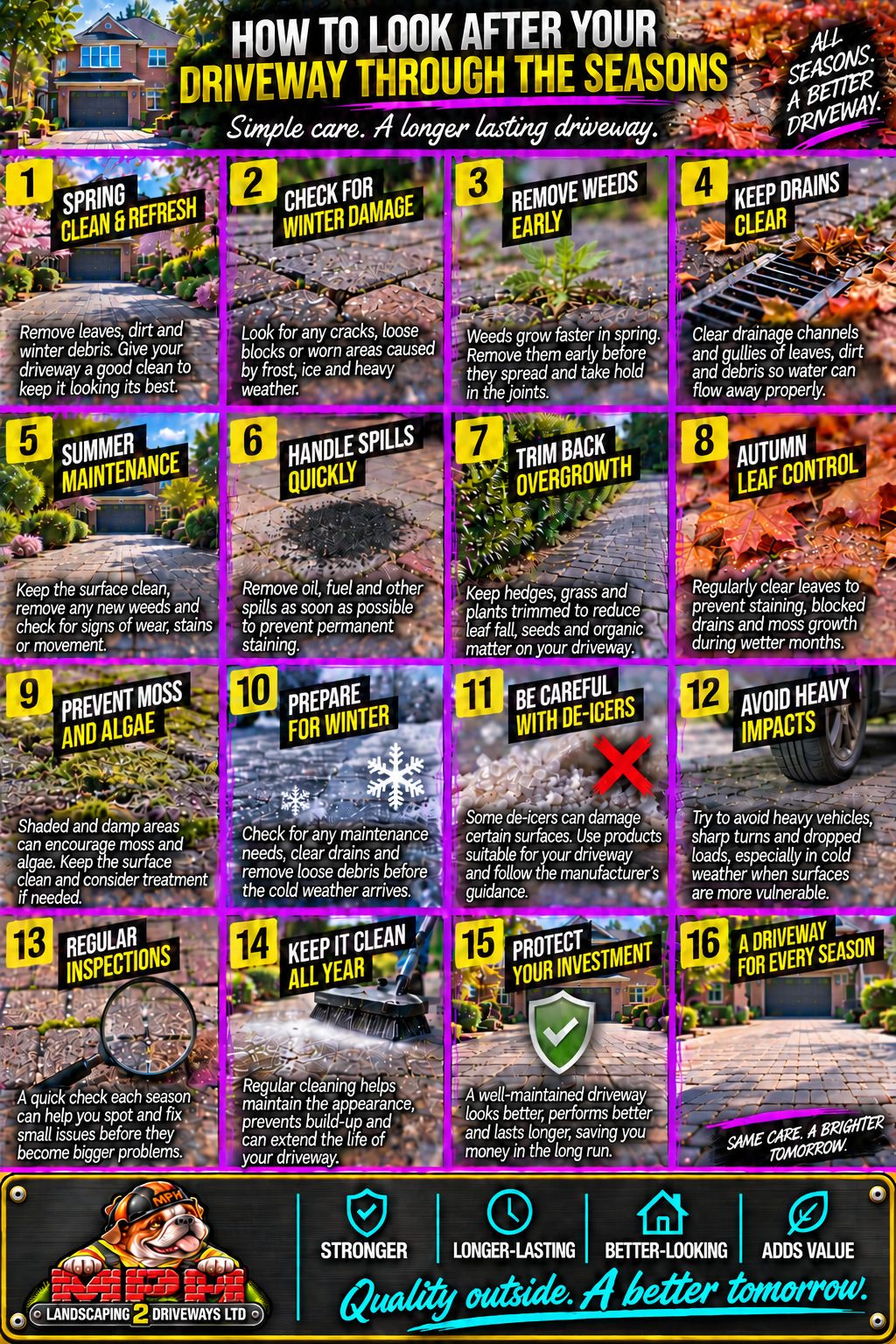
Driveway care through the seasons
Keep on top of driveway care through the seasons, from spring cleaning and summer spills to autumn leaves, clear drains and winter surface checks.
Key points: Driveway care through the seasons
- Look for loose areas or damage when checking the driveway after winter.
- Deal with spills, weeds and leaf build-up before they become harder to manage.
- Use winter treatments suited to the surface and follow the product guidance.
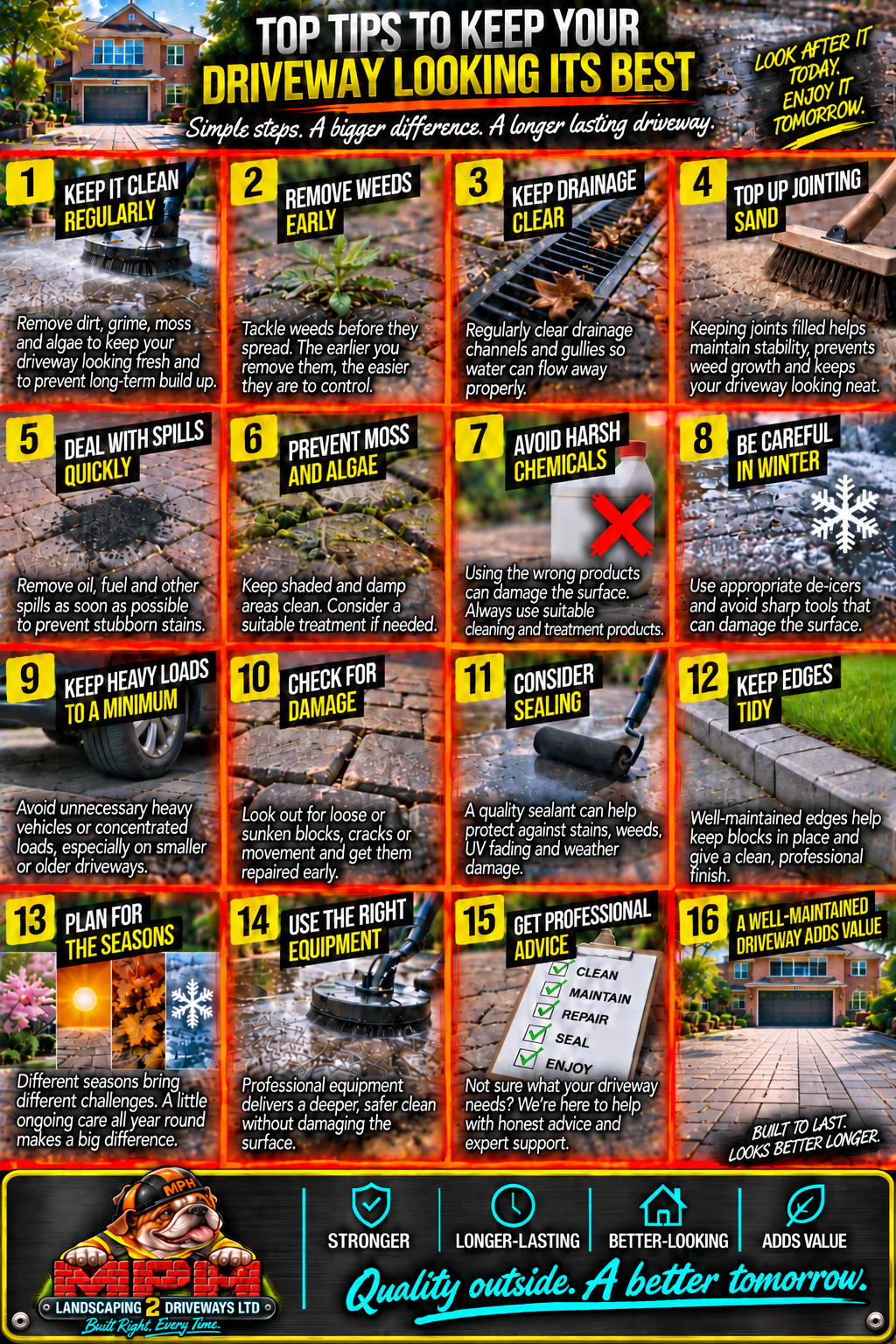
Keep your driveway looking its best
A practical driveway maintenance checklist covering cleaning, spills, drainage, joints and edges. Small checks help you spot problems before they develop further.
Key points: Keep your driveway looking its best
- Inspect the surface for cracks, movement and areas that need attention.
- Keep drainage clear and maintain paving joints where required.
- Use suitable equipment and seek advice when the right repair is unclear.